

29+ Years Experience
Industry Expert Trainers
Live Projects
Real-Time Practical Training
Certification
Industry Recognized Certificate
Course Duration
6 Months
Register Now
Free Demo90% Placement Assistance
One-on-One Expert Consultation
About Java Full Stack Developer Course
The Java Full Stack Developer Course at APEC IT Training in Ameerpet is designed to help students gain complete web development skills from frontend to backend. This program covers modern UI technologies, backend frameworks, database management, and deployment fundamentals. With practical sessions and real-time project exposure, the course prepares you to become a confident and job-ready Java Full Stack Developer.
| Feature | Our Course |
|---|---|
| Live Interactive Sessions | ✅ Yes |
| Industry Expert Trainers | ✅ Yes |
| Real-World Projects | ✅ Yes |
| Hands-on Labs & Assignments | ✅ Yes |
| 1-on-1 Doubt Clearing | ✅ Yes |
| Resume & Interview Preparation | ✅ Yes |
| Lifetime Course Materials | ✅ Yes |
| Final Verdict | Best Choice for Career Growth |

HTML5

JavaScript

Node.js

React

CSS3

Bootstrap

jQuery

Express.js

MongoDB

Git
Lorem ipsum dolor sit amet, consectetur adipiscing elit. Ut elit tellus, luctus nec ullamcorper mattis, pulvinar dapibus leo.
Become a
Full Stack Java Developer
|
Become a
Full Stack Java Developer
|
Master Java Full Stack Development with industry projects, expert trainers, and placement support at APEC Training.
Full Stack Java Course in Hyderabad
Join the Full Stack Java Course in Hyderabad designed for beginners and aspiring developers who want to build real-world applications. Our training program covers frontend, backend, databases, and deployment skills required to become a professional Java developer.
At APEC Training, we provide Full Stack Java training in Ameerpet with practical projects, expert trainers, and placement support to help students build strong technical careers in the IT industry.
Key Highlights of the Course
✔ Learn from the best institute for Java Full Stack Developer in Hyderabad with experienced mentors.
✔ Industry-oriented Full Stack Java training institutes in Hyderabad with real-time projects.
✔ Practical Java Full Stack training in Hyderabad covering Spring Boot, React, and Microservices.
✔ Hands-on learning from one of the Top Java coaching institutes in Hyderabad.
✔ Job-oriented Full Stack Java developer training in Hyderabad with interview preparation.
- Why Java? Java versus C/C++
- Java history, features, applications
- Java Editions
- JDK versions, JDK installations
- JVM Structure, Components
- Java 7, Java 8 Features
- Tokens
- Identifiers, Data types, Keywords
- Variables, Constants(Literals)
- Type casting
- Operators
- Java program structure
- Creating and running Java program
- Working with IDEs : Net Beans and Eclipse
- Command-Line Arguments
- Wrapper Class
- Data types vs Wrapper classes
- Auto boxing vs unboxing
- toString(), parseXXX(), valueOf(), XXXValue()
- Selection Statements
- If, if-else, nested-if, else-if ladder, switch
Looping Statements
while, do-while, for, for-each
break v/s continue
- Single Dimensional arrays
- Multi Dimensional arrays
- Jagged arrays
- String Manipulation
- String, StringBuffer and StringBuilder classes
- StringTokenizer
- OOP Concepts
- Data Members, Methods, Constructors
- Garbage Collection, this keyword
- Static and non-static blocks
- Polymorphism
- Inheritance
- Types of Inheritance
- Method Overriding
- super keyword
- Dynamic Polymorphism
- final keyword
- Java package structure
- Predefined packages
- User-defined packages
- Importing packages
- Access Modifiers
- private, public, protected, abstract
- volatile, synchronized
- Interface declarations
- Marker interface
- Adapter classes
- Implementing multiple inheritance using interfaces
- Introduction, Types of Errors
- Exception vs Error
- try-catch blocks
- Nesting try-catch blocks
- finally block usage
- throw/throws keyword
- User-defined Exceptions
- Introduction to multitasking
- Process based vs thread based multitasking
- Defining a thread
- Life Cycle stages of a Thread
- Setting & getting name of Thread
- Thread Priorities
- Preventing Thread from
- Thread Synchronization using wait() and notify()
- Execution(stop(),join(),sleep(),suspend(), wait())
- Deadlocks, Daemon threads
- Introduction
- Advantages
- Static inner classes
- Member inner classes
- Local inner classes
- Anonymous inner classes
- Introduction
- Byte oriented streams versus Character Oriented Streams
- Normal vs Buffered streams.
- Writing & reading operations on file
- File class
- Serialization and Deserialization
- Generics
- Introduction to Arrays
- Advantages of collections
- Collection vs Collections
- Iterator interface
- List, Set, Map interfaces and implemented classes
- Introduction to Applets
- Advantages & Disadvantages
- Life cycle of Applets
- Creating Applets
- Applet with parameters
- AWT (Abstract Window Tool Kit)
- Introduction
- Creating user-defined windows
- Adding Components on user-defined window
- Event Handling
- Different types of Listeners
- Implementing Adapter classes
- Swings
- Difference between Swing and AWT
- Components hierarchy
- Individual Swings components : JLabel, JButton,JTextField, JTextArea
- Types of Layouts, Their applications
- JDBC
- Language versus technology versus framework
- Persistence Storage: Files versus Databases
- JDBC Architecture
- Types of Drivers
- Steps for Submitting DML command to a databas
- Steps for Submitting SELECT command to a database
- Need of PreparedStatement, Batch Updates
- Types of ResultSet objects
- Callable Statement, BLOB & CLOB
- Advanced JDBC Features
- Limitations of JDBC
- Networking Basics
- java.net package, Socket and ServerSocket, URLÂ info
- Client-Server programming
- Introduction to server-side scripting
- HTTP Protocol & HTTP Methods
- Servlet Interface, GenericServlet, HttpServlet
- Servlet Life Cycle
- Servlet program structure
- ServletConfig, ServletContext objects
- Database Connectivity through Servlets
- Servlet Collaboration : Data sharing and control sharing
- RequestDispatcher methods:
- forward(), include()
- Session Tracking Mechanisms
- Cookies, HttpSession, URL Rewriting
- Filters
- Introduction to JSP
- JSP life cycle
- Implicit & Explicit objects & scopes
- JSP Directives page, include, taglib
- JSP Scripting Elements
- Custom tags in JSP
- JSP with JDBC
- Cookies and Sessions
- Need of Ajax, Ajax Architecture, Ajax program
- Ajax-Database integration
- J2EE
- Adv. of Hibernate compared to JDBC
- Introduction to ORM
- Hibernate Configuration XML file(hibernate.cfg.xml)
- Hibernate Architecture, Data Types
- First Application using Hibernate
- Hibernate API, CRUD operations
- Primary key Generators
- Hibernate Query Language(HQL)
- Connection to Database server
- Loading into Hibernate application
- Query execution in Database
- Procedure and function invocation
- Connection with Database by JDBC
- Inheritance Mapping
- Table per Sub class
- Table per class
- Table per Concrete class
- Integration with – Servlets, JSP
- Introduction to spring framework
- Spring Inversion of Control (IOC)
- Dependency Lookup
- Dependency Injection
- Constructor Vs Setter Injection
- Resolving Constructor Arguments
- Mapping Constructor Arguments
- Collection Injection and Merging
- Bean Inheritance, Bean Auto Wiring
- Annotations @Autowired,
- Property PlaceholderConfigurer
- Introduction to Spring with Jdbc
- JDBCTemplate
- PreparedStatement
- RowMapper
- ResultSetExtractor
- NamedParameteJDBCTemplate
- Integrating Hibernate with Spring
- Introduction HibernateTemplate
- HibernateDAOSupport
- Â Â Spring-MVC
- Advantages of Spring MVC
- Dispatcher Servlet
- Parameterizable view
- UrlFileName view
- BeanName, View, XmlView
- Simple UrlHandlerMappings
- Validations
- Introduction
- JSON vs XML
- Java JSON Integration
HTML5
JavaScript
Node.js
React
CSS3
Bootstrap
jQuery
Express.js
MongoDB
Git
| Feature | Our Course |
|---|---|
| Live Interactive Sessions | ✅ Yes |
| Industry Expert Trainers | ✅ Yes |
| Real-World Projects | ✅ Yes |
| Hands-on Labs & Assignments | ✅ Yes |
| 1-on-1 Doubt Clearing | ✅ Yes |
| Resume & Interview Preparation | ✅ Yes |
| Lifetime Course Materials | ✅ Yes |
| Final Verdict | Best Choice for Career Growth |
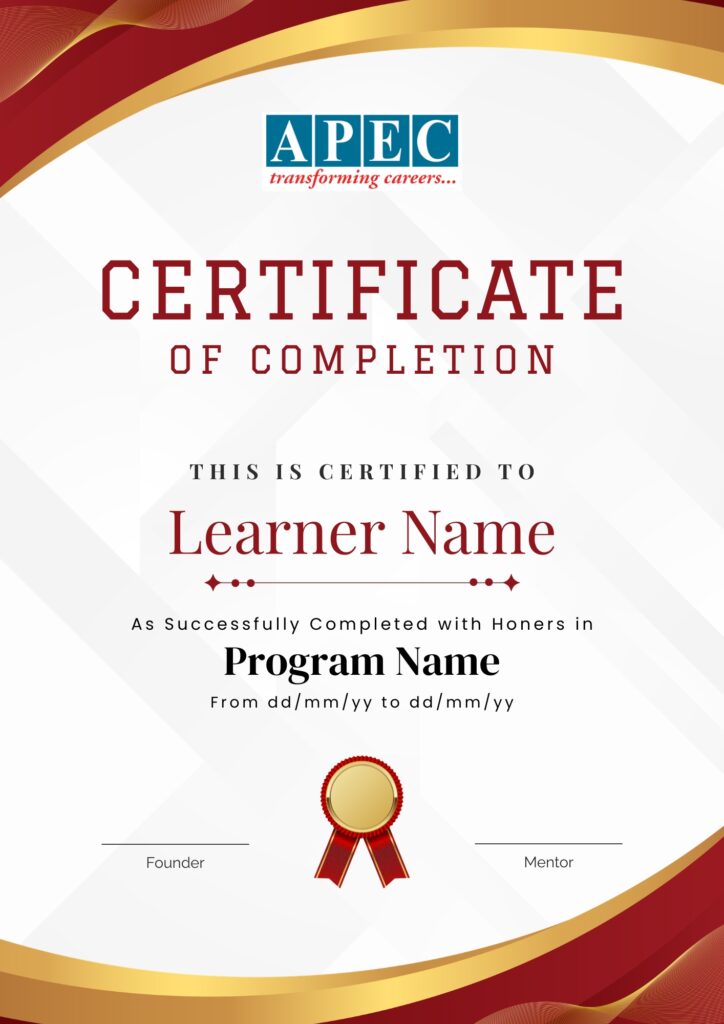
Industry-Recognized Certificate
Earn a certificate valued by top companies.
Stand Out in Job Market
Fortify Your Profile to Increase Credibility
Your Passport to Career Growth
Access Well-Paying Web Developer positions
Be in the spotlight by getting certified!
Industry-Recognized Certificate
Earn a professional certificate after completing the Full Stack Java Course.
Stand Out in Job Market
Strengthen your resume and improve credibility with an industry-recognized certification.
Your Passport to Career Growth
Open opportunities for high-demand web developer roles in the IT industry.
Who Should Join Full Stack Development Course
The Full Stack Java Course in Hyderabad is designed for learners who want to build strong web development skills and start a successful career in the IT industry. This course covers both frontend and backend technologies used in modern software development.
✔ Students & Fresh Graduates – Start your career in software development with practical skills.
✔ Job Seekers – Gain job-oriented knowledge through Full Stack Java training in Hyderabad.
✔ Programming Beginners – Learn Java and web development from the basics.
✔ Working Professionals – Upgrade technical skills with a Full Stack Java developer course in Hyderabad.
✔ Career Switchers – Move from non-IT roles into software development with structured training.

Still Confused? Want to know more?
Start your journey with APEC Training and build the skills needed for a successful IT career. Enroll today and take the first step toward becoming a confident professional.
FAQ'S
A Full Stack Java course trains learners in both front-end and back-end development using Java technologies. It includes Core Java, Advanced Java, Spring Boot, REST APIs, databases, and frontend technologies required to build complete web applications.
Students, fresh graduates, and working professionals can join the Full Stack Java course in Hyderabad. No prior coding experience is mandatory, as the training starts from basics and gradually moves to advanced concepts.
The Full Stack Java course duration generally ranges from 3 to 6 months, depending on the batch type, learning mode, and inclusion of practical projects and internship programs.
Yes, the Full Stack Java course includes hands-on real-time projects that help learners apply concepts practically and gain experience in developing full-scale web applications.
Yes, placement assistance is provided, including resume preparation, interview guidance, mock interviews, and job-oriented training to help students secure roles as Full Stack Java Developers.
The syllabus covers Core Java, Advanced Java, Spring Boot, Hibernate, RESTful services, SQL, version control tools, frontend technologies, and basic deployment concepts.
The average salary of a Full Stack Java Developer in Hyderabad typically ranges from ₹4 LPA to ₹10 LPA, depending on technical skills, project experience, and company requirements.
Yes, the Full Stack Java course is suitable for freshers. It is structured with step-by-step learning, practical labs, and mentor support to help beginners confidently enter the software industry.
Yes, both classroom training in Hyderabad and online instructor-led training options are available, allowing learners to choose flexible schedules based on their availability.
APEC Training Institute offers industry-oriented Full Stack Java training with experienced trainers, practical learning, real-time projects, placement support, and flexible batch timings, making it a trusted choice for Java training in Hyderabad.