
What Is C Programming: A Complete Beginner’s Guide to Understanding the Basics
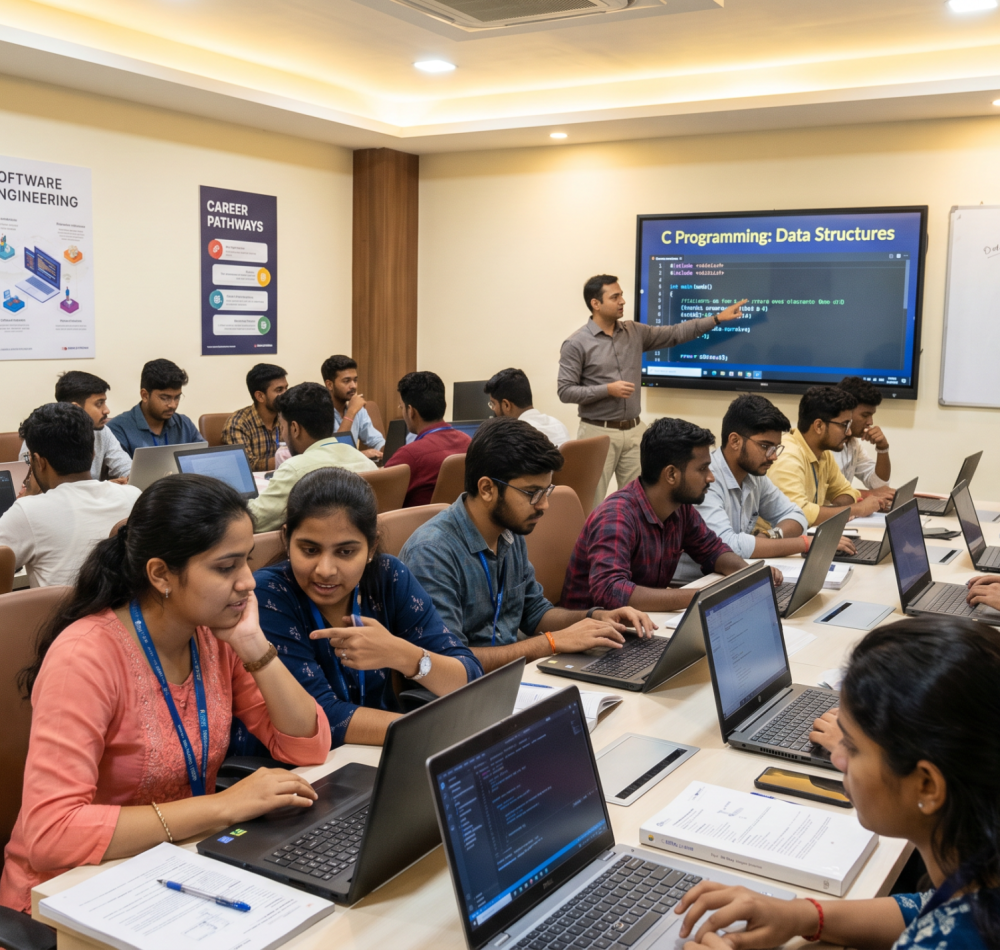
In today’s fast-paced IT world, the demand for a C Programming Course in Hyderabad is steadily increasing as it forms the foundation of many modern programming languages. Companies are looking for professionals who understand core programming concepts, problem-solving techniques, and efficient code development. C is not just a language—it’s the backbone of systems programming, helping developers build everything from operating systems to embedded applications. This C language training in Hyderabad covers essential topics like data types, control structures, functions, pointers, memory management, and file handling in a simple, practical, and beginner-friendly approach. If you are planning to start your programming journey in 2026, this C programming course in Hyderabad will help you build strong coding fundamentals and become a confident, job-ready developer.
What Is C Programming?
C programming is a powerful, general-purpose programming language used to build software, operating systems, and embedded applications. It was developed in the early 1970s by Dennis Ritchie at Bell Labs. The goal behind C programming was to create a language that could efficiently interact with system hardware while remaining simple enough for developers to use.
In simple terms, C programming helps you communicate with a computer using structured instructions. It converts human logic into machine-level execution. This is why C is often called the foundation of programming. When you understand C programming, you understand how software actually works behind the scenes.
C programming is also the base for many modern programming languages such as C++, Java, and Python. This makes learning C programming a smart first step for beginners.
Why Is C Programming Important?
C programming is important because it builds strong programming fundamentals. It helps you understand core concepts such as memory management, data handling, and execution flow. These concepts are essential for becoming a skilled software developer.
One key reason why C programming stands out is its speed. Programs written in C execute faster compared to many other languages. This is because C works very close to the hardware level. It gives developers more control over system resources.
Another reason is its real-world relevance. Many operating systems like Linux and Windows use C programming at their core. This shows that C is not just a beginner language but also a professional one.
Learning C programming also improves your logical thinking. It trains your mind to solve problems step by step. This skill is useful not only in coding but also in real-life decision-making.
How Does C Programming Work?
C programming works through a clear and structured process. First, a programmer writes the code using a text editor. This code is known as source code. The next step is compilation. A compiler like GCC converts the source code into machine-readable instructions.
Once the code is compiled successfully, it becomes an executable file. This file can be run on a computer to produce output. If there are errors in the code, the compiler shows them so the programmer can fix them.
A basic C program includes header files, a main function, and statements that perform tasks. For example, a simple program can display a message on the screen. This basic structure helps beginners understand how programming logic works in a real environment.
What Are the Core Features of C Programming?
C programming is known for its simplicity and power. One of its main features is structured programming. This means programs are divided into smaller parts called functions. This makes code easy to read and maintain.
Another feature is speed. Since C is close to machine language, it executes programs quickly. This makes it suitable for applications where performance matters.
C programming also provides direct access to memory using pointers. This feature allows developers to create efficient and optimized programs. However, it requires careful handling.
Portability is another advantage. A C program written on one system can run on another system with minimal changes. This makes it widely used across different platforms.
Where Is C Programming Used?
C programming is used in many real-world applications. It is widely used in operating systems, embedded systems, and hardware-level programming. Many tools and utilities in Unix are developed using C programming.
In embedded systems, C programming is used to develop software for devices like microcontrollers, IoT devices, and automotive systems. It is also used in database systems, compilers, and networking tools.
C programming is also used in game development, especially in building game engines. Its speed and efficiency make it suitable for handling complex calculations.
Because of its reliability and performance, C programming continues to be a preferred choice for developers working on critical systems.
When Should You Learn C Programming?
C programming is best learned at the beginning of your programming journey. If you are a beginner, it helps you understand basic concepts such as variables, loops, conditions, and memory management.
Learning C programming early builds a strong foundation. It makes it easier to learn advanced languages later. You will not just learn how to code but also understand how coding works internally.
Students, freshers, and career switchers can all benefit from learning C programming. It is especially useful for those who want to work in system programming, embedded systems, or software development.
How to Start Learning C Programming?
Starting C programming requires a clear and consistent approach. Begin with basic concepts like data types, variables, and input-output operations. These form the foundation of programming.
Next, learn control statements such as if conditions and loops. These help in decision-making and repetition. After that, focus on functions and arrays. These concepts help in organizing code efficiently.
One of the most important topics in C programming is pointers. Pointers allow you to work with memory directly. Understanding pointers can take time, but they are essential for mastering C.
Practice is the most important step. Write small programs daily. Solve problems and try to build simple projects. This will improve your confidence and skills.
Advantages and Disadvantages of C Programming
C programming has many advantages. It offers high performance and efficiency. It helps build strong programming fundamentals. It is widely used and has a large community for support.
However, it also has some disadvantages. C programming does not support object-oriented programming features like classes and inheritance. Memory management is manual, which can lead to errors if not handled properly.
Despite these limitations, C programming remains one of the best languages for beginners.
Real-World Example of C Programming
C programming is used in many real-world applications. For example, many components of Linux are written in C. This ensures speed and stability.
In the automotive industry, C programming is used in embedded systems to control various functions in vehicles. It is also used in developing firmware for hardware devices.
Networking tools and database systems also use C programming for performance optimization. These examples show how important C programming is in modern technology.
Why Choose APEC Training for C programming Course?
Still, APEC Training offers training grounded on real industry requirements, If you’re looking for a practical and career- concentrated literacy experience. The course includes hands- on systems, step- by- step guidance, and support in erecting a strong portfolio. The focus is on helping you understand user geste and apply design generalities in real scripts.
The training approach is designed to make you comfortable with real work surroundings. Rather than only learning propositions, you exercise continuously and ameliorate your designs with feedback. This helps you build confidence and prepares you for interviews. With proper mentorship and placement support, APEC Training helps you come job-ready with practical knowledge.
Conclusion
C programming is the backbone of modern programming and an essential skill for beginners. It helps you understand how software works at a deeper level and builds strong logical thinking.
If you are planning to start your IT career, learning C programming is the first step. Choosing the right training institute makes a big difference. APEC Training is known for providing industry-focused training with real-time projects and placement assistance. With expert guidance and practical exposure, beginners can confidently move into software development roles.
FAQ'S
C programming is a general-purpose programming language used to develop software, operating systems, and embedded applications.
Yes, C programming is beginner-friendly if you practice regularly and follow a step-by-step approach.
C programming is used for system programming, embedded systems, operating systems, and hardware-level applications.
You can learn the basics of C programming in 2 to 4 weeks with consistent practice.
C programming builds strong fundamentals and helps you understand how programming works internally.
Yes, learning C programming first helps you understand core concepts before moving to languages like Python.
Yes, C programming is still widely used in system programming, embedded systems, and critical applications.